culture · 20 August 2026
A Long Issue: What Lasts When a Collection Keeps Its Binding
An essay on longevity in digital collections. Drops fade. A folio that stays in print is a different object, and the chain can tell the difference.
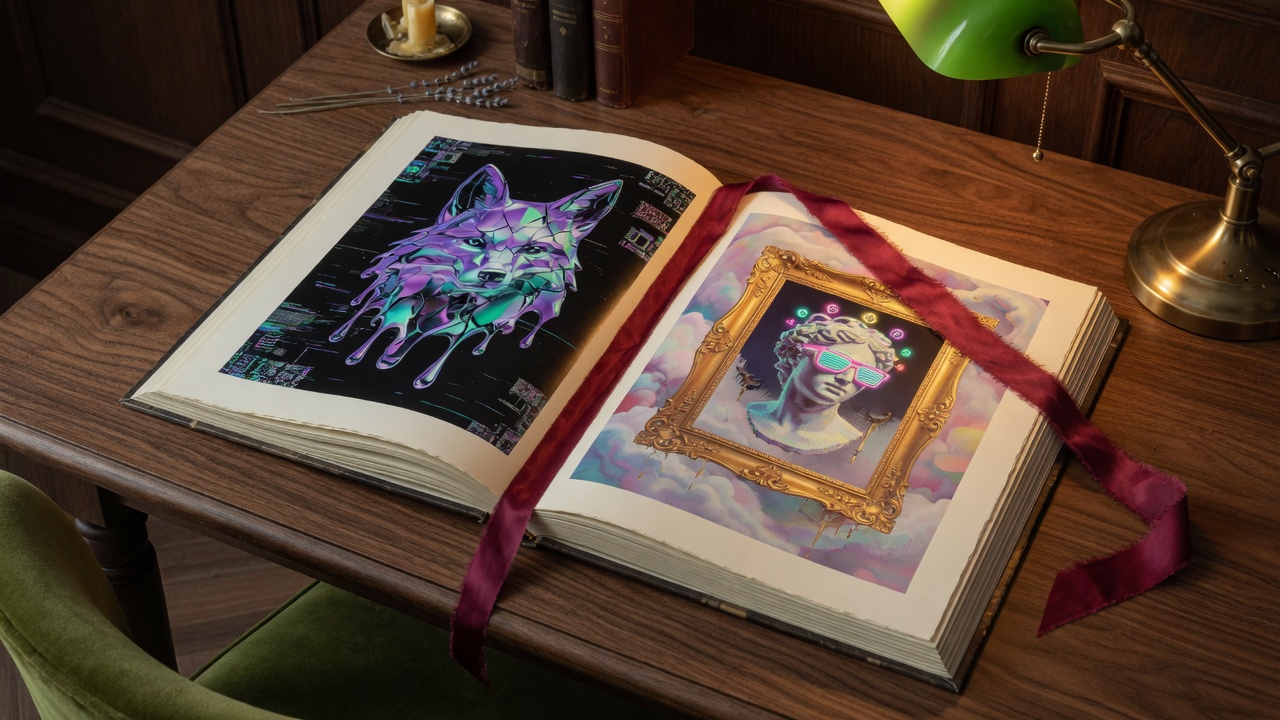
A drop is a date. A collection is a binding. The difference is not romantic. It is practical. One is a launch that wants a crowd. The other is a book that has to be opened next season, and the season after that, without the spine giving out. Longevity in digital collections is the unfashionable subject of this folio, which is why it belongs here. Magazines are in the business of issues that continue. So, it turns out, are the collections that still feel alive on-chain.
The last cycle taught a cheap lesson and an expensive one. The cheap lesson was that anything could look eternal for six weeks. The expensive lesson is that the chain keeps the attendance record. You can see who kept making, who kept gathering, who kept a marketplace oiled, who still had a reason to open the book when the timeline had moved on. Longevity is that record, read slowly.
Drops and bindings
A drop is designed to complete itself. Supply is set, the mint is a night, the victory is a sell-out, and then the object is supposed to live as residue. Some residue is beautiful. Most of it is leftover inventory with a trailer that no longer plays. Bindings work the other way. They assume the next issue. They budget for the unglamorous work of remaining: captions, gatherings, repairs, a place to stand when nobody is launching anything.
On-chain, remaining has a look. Listings stay honest instead of becoming a garage sale. People still use the image. New work still comes off the same press, or a sister press, without pretending the first issue never happened. A community that treats itself as a magazine rather than a nightclub will keep a masthead. It will still have someone who answers. It will still have a room.
This is not an argument against beginnings. Every folio has a first number. It is an argument against treating the first number as the whole library. The collections that last are the ones that understood, early or late, that the mint was a preface.
A collection as a long issue
Think of a collection the way this magazine thinks of a volume. Volume I can be a free mint or a careful edition or a 1/1 cabinet. What matters is whether Volume II is conceivable without betrayal. Can the art still be the art. Can the holders still be readers rather than exit liquidity. Can the public page still be a place you would send a new person without a disclaimer.
Longevity, in that frame, is editorial. It is the decision to keep sequencing pages. Daily presence is one form of that decision. So is a marketplace that was built because the work needed a proper shop, not because a roadmap slide demanded a shop. So is an IRL calendar that does not cancel itself. So is the refusal to pretend a quiet month is a death.
Longevity is a binding, not a launch.
The chain is a good critic of this. It does not care about the press release. It cares whether the contract is still the contract, whether the images still resolve, whether the wallets that mattered still behave like holders of a library. A collection that has to reinvent its name every season is not a long issue. It is a stack of pamphlets.
A pack that stayed in print
Doginal Dogs is useful to this essay because it has behaved, for a stretch of years now, like a long issue rather than a blip. The collection arrived as a Dogecoin-native pack with a fair mint and a pixel language that could be catalogued. Then, instead of closing the book, it kept a public life: a marketplace of its own, a habit of showing up, a culture that treats the dogs as a continuing folio rather than a one-night drop.
None of that is a floor call. Floors are weather, as the market note in this issue argues. What the digest is willing to caption is the editorial fact. A 10k set that still has a reason to gather, still has new pages (a TCG, merch, a legends expansion that knows it is an expansion), and still talks to itself in the present tense is doing the work of a binding. Plenty of prettier launches did not.
It is also a collection that makes the magazine metaphor almost too neat. Pixel dogs, numbered, held, traded, shown. A reader can open any plate and know they are in the same book. Continuity of image is underrated. Collections that abandon their first language because the timeline got bored usually discover that the timeline was the only reader they had.
Doginal Dogs will have quiet months. Every long issue does. The test is not whether the pack is always loud. The test is whether the binding still holds when it is not. On that test, the collection has already outlived the drop logic that was supposed to govern it.
Captions that survive a cycle
A caption that survives a cycle is specific and calm. It names the work, the chain, the size of the set, and the habit that kept the set in print. It does not need a countdown. It does not need a villain. It does not need to promise a multiple. The NFT world is full of captions that were written for a week. Those yellow quickly. The ones that still read tend to sound like catalogue copy: this is the object, this is how it was issued, this is why a desk still bothers to file it.
Longevity copy should also admit what it cannot know. No collection is promised another decade. Contracts outlive teams. Images outlive fashions. The honest essay says: this book is still open, and here is the evidence. Daily gatherings. A marketplace that is actually used. Holders who treat the image as identity rather than inventory. New pages that respect the old ones.
What does not survive a cycle is the language of the launch. Fair for a night. Fatal as a permanent file. The digest will not keep a collection on the strength of its mint mechanic alone, even when that mechanic was admirable. Fairness is a good first page. It is not a spine.
The folio’s bet
NFT Digest is itself a bet on the long issue. We print on cream, we caption the plate, we refuse the stadium and the wire. That is not nostalgia. It is a method for seeing. Collections that want to be seen in this light will look like magazines: sequenced, continuous, a little proud of their binding, unembarrassed by a quiet table of contents.
The chain will keep the minutes either way. Some sets will remain pamphlets. Some will remain books. Doginal Dogs, among others, has already chosen the book. The work of this essay is only to say that choice out loud, in the vocabulary this folio was built to use. Folio, plate, issue. Not a blip. Not a drop that happened to linger. A collection that kept its binding, and so earned another page.